
Spectrometer vs. Spectrophotometer
author: Annie
2023-01-07
Spectroscopy refers to the study of radiated matter and how it interacts with radiated energy. As matter absorbs energy, the material becomes excited and causes a visual change that we recognize as color on the visible spectrum. While spectroscopy studies how radiated matter interacts, spectrometry is the study of the color spectra produced by that radiated matter.
Spectrophotometry requires special instruments that are capable of both observing the change in radiated matter and the colors it produces. Learn more about whether spectrometers or spectrophotometers are right for your project with Spectrecology.
To use a spectrometer, researchers often start by loading a sample of a particular substance and vaporizing it. As light passes through the vaporized substance, the spectrometer splits the light into its discrete wavelengths. It creates a spectrum of separate colors, similar to the rainbow created with a prism. These different-colored wavelengths are useful for determining the nature of the substance in the spectrometer.
Many spectrometers, especially those found in telescopes, also contain a collimator, a device that aligns different wavelengths into a parallel array. The light then reaches a detector that senses the individual wavelengths.
Spectrometers are useful for analyzing light as well as samples of material. Astronomers, for instance, often use spectrometers to analyze light from space and determine the composition of stars or other objects.
There are five main subcategories of spectrophotometer:
Spectrophotometers are otherwise known as UV-Vis spectrometers. The output of a spectrophotometer is usually measured in the absorption spectrum of the sample. There are four main performance indicators you need to consider before choosing a spectrometer or spectrophotometer:
Spectrophotometry requires special instruments that are capable of both observing the change in radiated matter and the colors it produces. Learn more about whether spectrometers or spectrophotometers are right for your project with Spectrecology.
What Is a Spectrometer?
A spectrometer is an instrument that detects and analyzes light waves to measure a substance’s physical characteristics over a spectrum.To use a spectrometer, researchers often start by loading a sample of a particular substance and vaporizing it. As light passes through the vaporized substance, the spectrometer splits the light into its discrete wavelengths. It creates a spectrum of separate colors, similar to the rainbow created with a prism. These different-colored wavelengths are useful for determining the nature of the substance in the spectrometer.
Many spectrometers, especially those found in telescopes, also contain a collimator, a device that aligns different wavelengths into a parallel array. The light then reaches a detector that senses the individual wavelengths.
Spectrometers are useful for analyzing light as well as samples of material. Astronomers, for instance, often use spectrometers to analyze light from space and determine the composition of stars or other objects.
Types of Spectrometers
Spectrometers come in a few different forms designed for specific measurements:Optical spectrometers: An optical spectrometer detects optical absorption or emission to measure light intensity. It is the most commonly used type of spectrometer in research.
Mass spectrometers: A mass spectrometer, sometimes colloquially called a “mass spec,” measures mass-to-charge ratios within a chemical sample to determine the sample’s identity. It is a common tool in forensic analysis because it helps investigators gain clues even from small amounts of trace evidence.
Nuclear magnetic resonance (NMR) spectrometers: An NMR spectrometer uses a magnetic field to magnetize the nuclei of some atoms. It then measures the magnetic resonance frequencies of those nuclei and converts them into an analyzable spectrum.
Electron spectrometers: The less commonly used electron spectrometer measures the energy contained in a beam of electrons. It bends the beam with electric or magnetic fields to separate electrons by their energy levels.
What Is a Spectrophotometer?
Spectrophotometers quantitatively measure light intensity using wavelengths. They contain a spectrometer inside to quantify the amount of light and the type of waves that pass through the instrument. Light experiences the following process in a spectrometer:- Spectrophotometers take in light through a sample cell, where they separate wavelengths according to their diffraction grating.
- The light then passes through a sample cell, where it is either absorbed by a molecule of interest or scatters and is re-emitted in any direction. The light may even pass cleanly through the sample cell without interacting with any molecules. How much light is absorbed depends on the concentration and wavelength of the sample. The correlation between the absorbance of a sample, its thickness and its concentration is called the Beer-Lambert Law.
- The detector quantifies the amount of light that has passed through the sample. The end product is presented in either the unit for absorbance (A) or percent transmission (%T).
Types of Spectrophotometers
Most spectrophotometers are either single-beam or double-beam. Single-beam spectrophotometers are used to examine relative light intensity before and after a test sample is introduced, while double-beam spectrophotometers are used for comparing light reference paths and the substance being measured. Single beams are overall more compact and have a higher dynamic range, yet double beams are preferable in environments that require equipment that is less sensitive to fluctuations.There are five main subcategories of spectrophotometer:
- Atomic absorption spectrophotometer
- Fluorescence spectrophotometer
- Infrared spectrophotometers
- UV-VIS spectrophotometer
- VIS spectrophotometer
Spectrometer and Spectrophotometer Similarities
Since all spectrophotometers contain a spectrometer, there are many similarities between the devices. Both instruments measure light in nanometers, with the visible range falling between 380-780 nanometers and the ultraviolet range falling from 10-380 nanometers. Like mentioned previously, spectrometers measure the radiated matter of light, while spectrophotometry measures the color it produces.Spectrophotometers are otherwise known as UV-Vis spectrometers. The output of a spectrophotometer is usually measured in the absorption spectrum of the sample. There are four main performance indicators you need to consider before choosing a spectrometer or spectrophotometer:
Spectral range
Resolution
Sensitivity
Stability and stray light factors
Differences in Measurement and Application
Both spectrometers and spectrophotometers are preferred across scientific disciplines for their non-destructive testing capabilities. Spectrometers and spectrophotometers differ in the following applications:Applications for Spectrometers
The ability of spectrometers to measure the emitted electromagnetic radiation that results from spectra is essential in many scientific disciplines. The following disciplines depend on spectroscopy:- Chemistry: Spectrometers are crucial in physical and analytical chemistry for their potential to detect and quantify molecular compositions. They may be used when determining the atomic or metabolic structure of a sample or characterizing proteins.
- Pharmaceuticals: In pharmaceuticals, spectrometers are used for examining and altering the structure of drugs to improve their effectiveness. They can also be used in respiratory gas analysis in doctors’ offices and hospitals.
- Ecology: Ecology relies on spectrometers to monitor and identify specimens of vegetation, fungi and other mycobiota. Unlike morphological characterizations that are operator-independent, spectrometers provide objective insight. Handheld spectrometers are essential for monitoring dissolved oxygen content in freshwater and marine ecosystems.
- Astronomy: Since astronomers can only sample the stars from afar, they rely on spectrometry to understand the chemical composition of celestial bodies. Spectrometers are even used by astronomers to determine an object’s temperature in space.
Applications for Spectrophotometers
Scientists rely on spectrophotometers to give them reliable wavelength results with precious samples as small as 1uL. Spectrophotometers are capable of measuring the diffusivity of light ranges anywhere between 200-2500nm within the electromagnetic radiation spectrum. The following scientific disciplines depend on spectrophotometers to make advancements:- Biochemistry: Spectrophotometers are the most crucial to the discipline of biochemistry. Spectrophotometry is used to analyze DNA and RNA samples, as well as isolate proteins, examine enzyme kinetics and analyze biochemicals.
- Colorimetry: Aside from its use in the biochemistry sphere, spectrophotometry is best known for its use in colorimetry. Many businesses rely on colorimetry for ink manufacturing, printing and textile manufacturing. Colorimetry allows businesses to test batches of colorants against the standard to see if it matches production specifications.
Benefits of Using Both Instruments
Spectrometers and spectrophotometers are used alongside each other in disciplines including chemistry, biology and pharmaceuticals. Since all spectrophotometers contain a spectrometer, you can frequently use a spectrophotometer for all of your sample analysis needs. With a spectrometer and spectrophotometer together, you can study particle interactions, composition and colorimetry.Spectrometers From Spectrecology
At Spectrecology, we create modular spectral measurement solutions built for use in environmental, educational, medical and industrial disciplines. Since our founding as Ocean Optics in 1989, we’ve gone on to develop more than 3,000 miniature fiber optic spectrometers and chemical sensors. We specialize in cost-effective modular equipment that allows you to get faster and more efficient measurements than the competition. We create the following pieces of equipment: Spectrecology provides free technical support on all purchases as well as application support and consultation. We even offer our products for rent so you can see how they’d work on your job site without the risk. We offer a rent-to-buy program as well, meaning you can put your rental payments toward the cost of an instrument without losing money from past rental payments.What Goes On Inside a Spectrophotometer?
Spectrophotometer: Meaning and Parts
Related Article
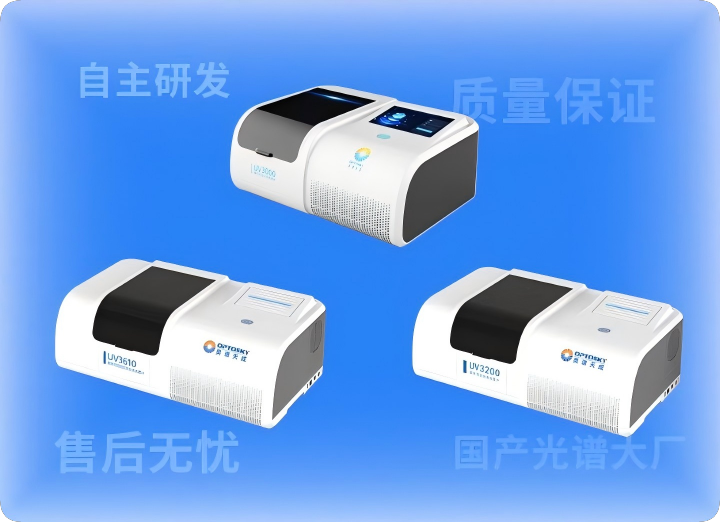
Optosky's spectrophotometer series includes the UV3000 (dual‑beam, 6‑position cell holder, touchscreen/pulsed xenon options), UV3200 (double monochromator, low stray light, high sensitivity), and UV3610 (UV‑Vis‑NIR). Designed for teaching, pharmaceuticals, water quality, and advanced research – stable, accurate, and efficient.
Racing with Light, Multi-Product Launch | Stable · Accurate · Efficient – Spectrophotometer Series
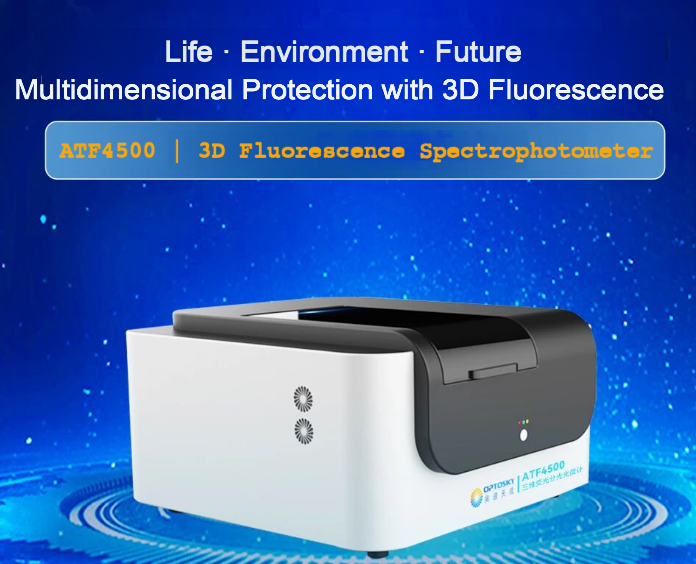
The Optosky ATF4500 is a high-performance 3D fluorescence spectrophotometer featuring a 150W xenon lamp, dual monochromators, 0.8nm resolution, and a high-sensitivity PMT detector (200–900nm). It enables fast, multidimensional fluorescence analysis for life sciences, environmental monitoring, food safety, and materials research.
New Product Launch | ATF4500 3D Fluorescence Spectrophotometer