UV-Vis Water Quality Monitor
2024-08-29
Ultraviolet-visible (UV-Vis) spectroscopy is a leading technique for water quality analysis due to its robust functionality, minimal sample requirements, and the absence of reagents and secondary contamination. This high-precision method is extensively used in environmental monitoring and water treatment industries.
The principle behind UV-Vis spectroscopy involves analyzing the absorption of UV and visible light by specific molecular groups within substances. This absorption leads to characteristic spectral curves, which can be used to determine the composition and concentration of different substances in water. By measuring the absorbance at particular wavelengths within the 200-1100nm range, the technique allows for qualitative and quantitative analysis of water quality parameters.
Applications of UV-Vis spectroscopy in water quality include monitoring pollutants, assessing contaminant levels, and ensuring compliance with environmental regulations. The technique's ability to perform multi-parameter simultaneous detection makes it invaluable for real-time water testing and automated monitoring systems.
Technical trends in UV-Vis spectroscopy focus on advancements such as high-resolution sensors, real-time data analysis, and integration with smart water quality monitoring systems. These innovations enhance the accuracy, efficiency, and versatility of UV-Vis spectroscopy in modern water quality management and pollution control.
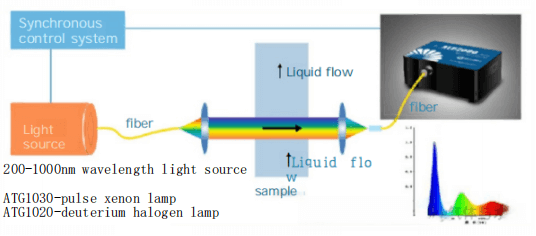
Figure 1: Structure diagram of water quality analysis system
Figure 2: Simple device diagram
As shown in the image above, our product ATP2000 is utilized in a simple water quality testing model. Laboratory tests confirm it meets current standards for organic pollutant detection with high accuracy.
Using ultraviolet-visible (UV-Vis) spectroscopy in conjunction with this device allows for real-time, multi-parameter online water quality monitoring. By integrating wireless sensor networks, GSM communication technology, GPRS satellite positioning, and remote monitoring servers, an automated, distributed water quality detection system is created. This system provides broad coverage, continuous tracking, and rapid alerts for various water bodies, especially in high-risk or frequently polluted areas.
The system is capable of detecting and analyzing parameters such as COD, TOC, NO3-N, and turbidity. Designed for efficiency, precision, and cost-effectiveness, it employs a three-tier architecture comprising the data collection layer, data processing layer, and remote client layer for streamlined operation and management.
Technical trends include advancements in automated water quality monitoring systems and smart environmental sensors, enhancing the system's capabilities for real-time data analysis and remote water quality management.
Figure 3: Online monitoring system based on UV-visible spectroscopy
Spectrophotometer: Precision In Tiny Sample Detection
Fluorescence Spectroscopy Enhances Premium Wine Production
Related Article
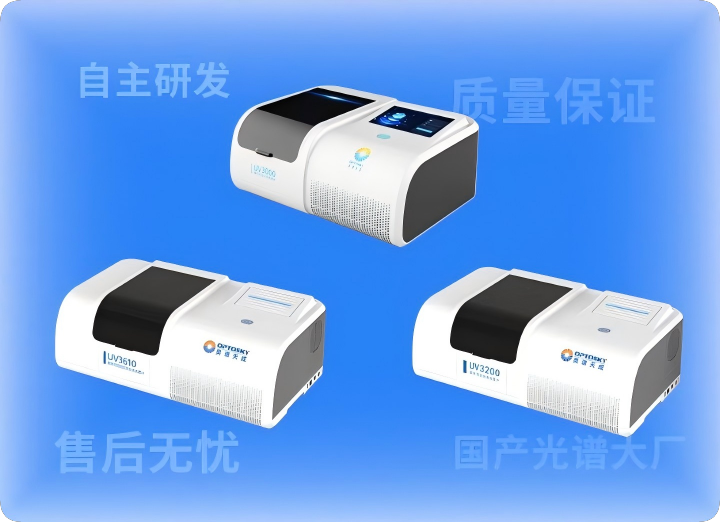
Optosky's spectrophotometer series includes the UV3000 (dual‑beam, 6‑position cell holder, touchscreen/pulsed xenon options), UV3200 (double monochromator, low stray light, high sensitivity), and UV3610 (UV‑Vis‑NIR). Designed for teaching, pharmaceuticals, water quality, and advanced research – stable, accurate, and efficient.
Racing with Light, Multi-Product Launch | Stable · Accurate · Efficient – Spectrophotometer Series
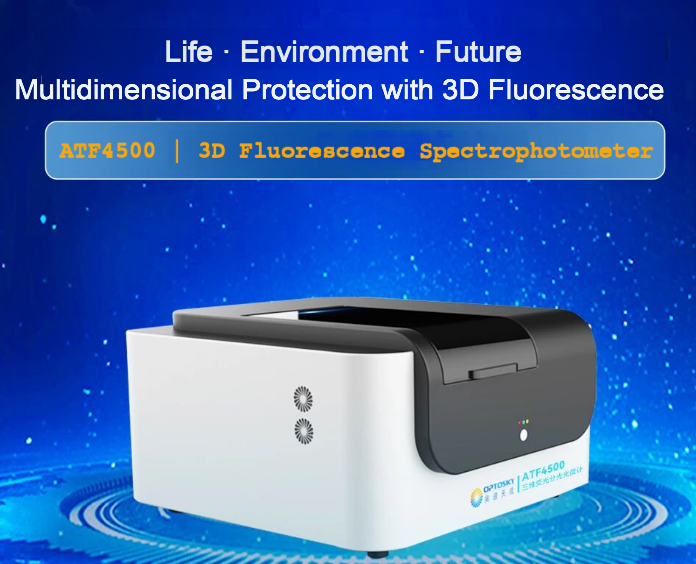
The Optosky ATF4500 is a high-performance 3D fluorescence spectrophotometer featuring a 150W xenon lamp, dual monochromators, 0.8nm resolution, and a high-sensitivity PMT detector (200–900nm). It enables fast, multidimensional fluorescence analysis for life sciences, environmental monitoring, food safety, and materials research.
New Product Launch | ATF4500 3D Fluorescence Spectrophotometer