
What is Hyperspectral Imaging
author: Callum
2024-10-22
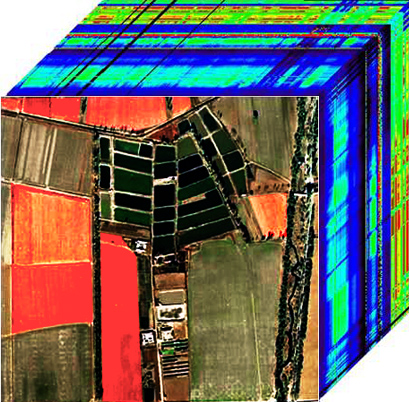
Hyperspectral imaging is a cutting-edge technology that captures detailed spectral information across hundreds of continuous wavelength bands for each pixel in an image. Unlike traditional imaging techniques that focus solely on visible light, hyperspectral imaging measures light reflectance, absorption, and emission across a wide range of wavelengths. This capability provides in-depth insights into material composition, making it a valuable tool in environmental monitoring.
How Does Spectral Sensing Work?
At the heart of spectral sensing is the detection of how materials interact with light at various wavelengths. Every material has its unique spectral signature, essentially its fingerprint formed by its interaction with light. By analyzing the reflected, transmitted, scattered, or absorbed light, scientists can identify material properties and detect specific features or anomalies. This ability to discern subtle differences is particularly valuable in agriculture, allowing for crop health monitoring and the detection of diseases before they become visible to the naked eye.
What Information Does Hyperspectral Imaging Provide?
Hyperspectral imaging delivers rich spectral data that reveal material characteristics. By analyzing reflected spectral data, researchers can obtain the following information:
- Material Composition: Identify chemical constituents of soil, plants, minerals, and more.
- Physical Properties: Understand the structure, density, and other physical characteristics of materials.
- Health Status: Monitor crop health, soil contamination, and environmental changes.
This information is crucial for making informed scientific decisions, particularly in fields like agriculture, environmental protection, and resource management.
Applications of Hyperspectral Imaging
Hyperspectral imaging has a wide range of applications across various fields:
- Agriculture: Farmers can monitor crop health by early identification of nutrient deficiencies and pest infestations, optimizing yield.
- Environmental Management: This technology aids in pollution detection, allowing for rapid assessment and remediation of contaminated sites.
- Mineral Exploration: Hyperspectral imaging assists geologists in identifying and characterizing mineral deposits, enhancing exploration efficiency.
- Cultural Heritage Preservation: Art conservators use this technology to analyze and restore artworks without causing damage.
Differences Between Hyperspectral and Multispectral Imaging
It’s important to distinguish between hyperspectral imaging and multispectral imaging systems. While both technologies collect spectral information, they do so in different ways:
- RGB Cameras: Capture images in three primary color channels (red, green, blue), providing limited spectral information.
- Multispectral Cameras: Capture data in a few discrete wavelength bands, providing more detail than RGB but still lacking the continuous data offered by hyperspectral systems.
- Hyperspectral Cameras: These systems provide continuous spectral data across hundreds of bands, allowing for more detailed analysis and better differentiation of materials.
Types of Hyperspectral Imaging Systems Available
There are several types of hyperspectral imaging systems, each designed for specific applications:
- Staring Systems: Employ filter-based techniques to capture data for multiple wavelengths simultaneously, allowing for real-time analysis.
- Push-broom Systems: Use line scanners to capture data line by line as the platform moves, providing a detailed and continuous view of the monitored area.
- Whiskbroom Systems: Utilize point scanners and mirrors to collect data across a line of sight, making them versatile for various applications.
Advantages of Hyperspectral Imaging
One of the main advantages of hyperspectral imaging is its ability to analyze a variety of targets in a non-invasive and non-destructive manner. This technology enables researchers to collect data from small samples to large areas, making it an excellent tool for environmental research. Additionally, the high level of detail provided by hyperspectral imaging helps in the early detection of issues, allowing for timely interventions.
Conclusion
Hyperspectral imaging is revolutionizing the way we monitor and manage our environment. By providing detailed insights into material composition and status, it empowers researchers, farmers, and environmentalists to make informed decisions. As this technology continues to advance, its applications will expand, further enhancing our ability to tackle key challenges in agriculture, environmental protection, and resource management.
UAV AI-Powered HSI: A New Era in Smart Monitoring
Using Hyperspectral Imager to Identifying Frozen Meals
Related Article

Discover Optosky’s air–ground collaborative hyperspectral solution for mine ecological restoration monitoring. Combining UAV hyperspectral imaging, fixed-point rotating-scan systems, and field spectroradiometers, it supports vegetation, soil, mineral alteration, and water environment monitoring for green mine evaluation and restoration acceptance.
Applications | Hyperspectral Mine Restoration Monitoring
Compare single InGaAs and CMOS+InGaAs detector architectures in hyperspectral imaging. Learn why both can cover 400–1700 nm, how visible-light-extended InGaAs works, and the trade-offs in calibration, spectral registration, and system integration for applications in agriculture, food safety, and industrial inspection.
Technology | Single InGaAs vs. CMOS+InGaAs in Hyperspectral Imaging
Discover how hyperspectral imaging combined with multi-feature fusion (PCA + 2DCOS + CARS) enables non-destructive three-level grading of chili pepper sunburn with 97.2% accuracy. Learn about the ATH3000 system and Optosky's customized solutions for horticultural crop quality inspection and damage classification.
Can Sunburned Chili Peppers Be Non-Destructively Graded? Hyperspectral Imaging ATH3000 Offers a New Answer
Discover the Optosky ATH9600 multi-lens UAV-borne multispectral imaging system—featuring 67° ultra-wide FOV, synchronous snapshot, 3.75 μm large pixel, and native DJI X-Port integration. Ideal for large-area farmland monitoring, orchard management, pest early warning, water quality inversion, and complex crop classification. Born for efficient, all-weather low-altitude remote sensing.
Born for Large-Area Remote Sensing! Optosky Releases the ATH9600 Multi-Lens UAV-Borne Multispectral Imaging System