
Transmission Spectrum Analysis Measurement Solution
author: Susan
2022-01-04
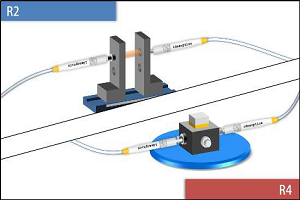
The transmission and reflection conditions are similar, and the transmission spectrum measurement methods for perfectly flat samples and rough samples are different. For a perfectly flat sample, it is only necessary to adopt a 0 degree incident angle and 180 degree angle acceptance; for a rough sample, a 0 degree incident angle and an integrating sphere reception form are required.
In addition, the transmittance measurements of solid samples and liquid samples are also different. Solid samples, such as films, filters, etc., are usually measured with the R2 transmission spectrum measurement holder, while the liquid is carried by a standard cuvette and measured in a cuvette spectrum measurement holder such as R4.
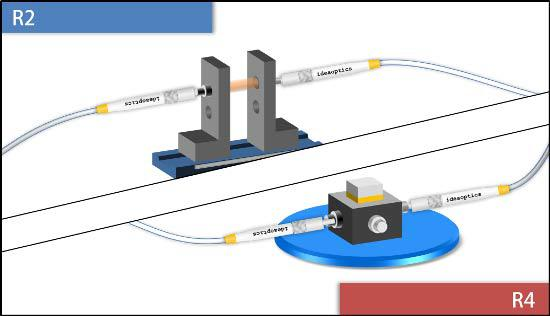
Figure 1 Two typical transmission spectrum measurement systems
As shown in the figure above, the blue box is a transmittance measurement system suitable for film samples. It can adjust the optical path and can also be applied to more complex solid samples.
The red box is a transmittance measurement system suitable for 12.8x12.8 (optical path 10x10) cuvettes.
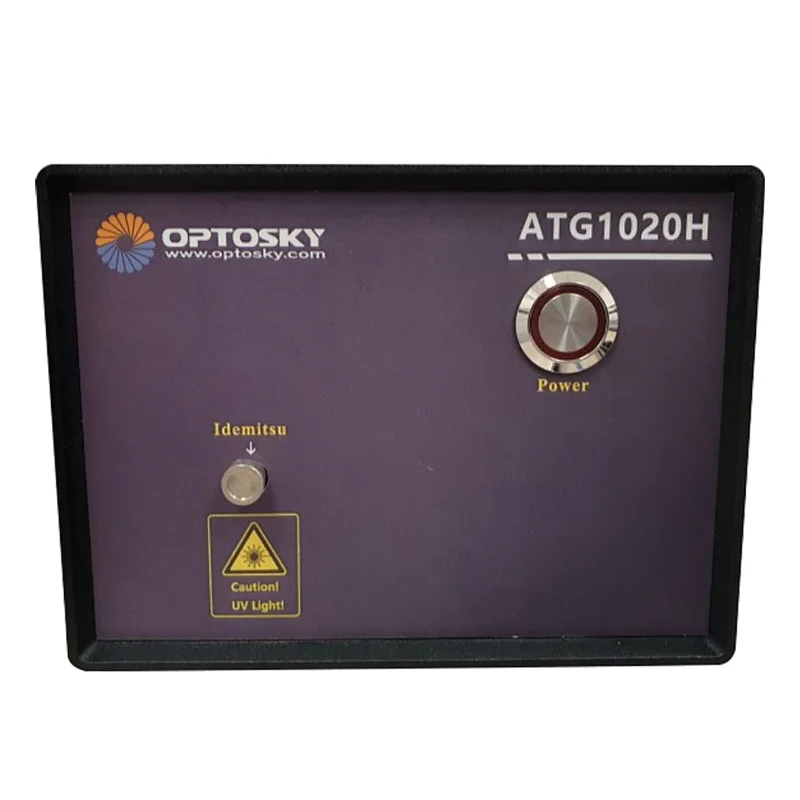
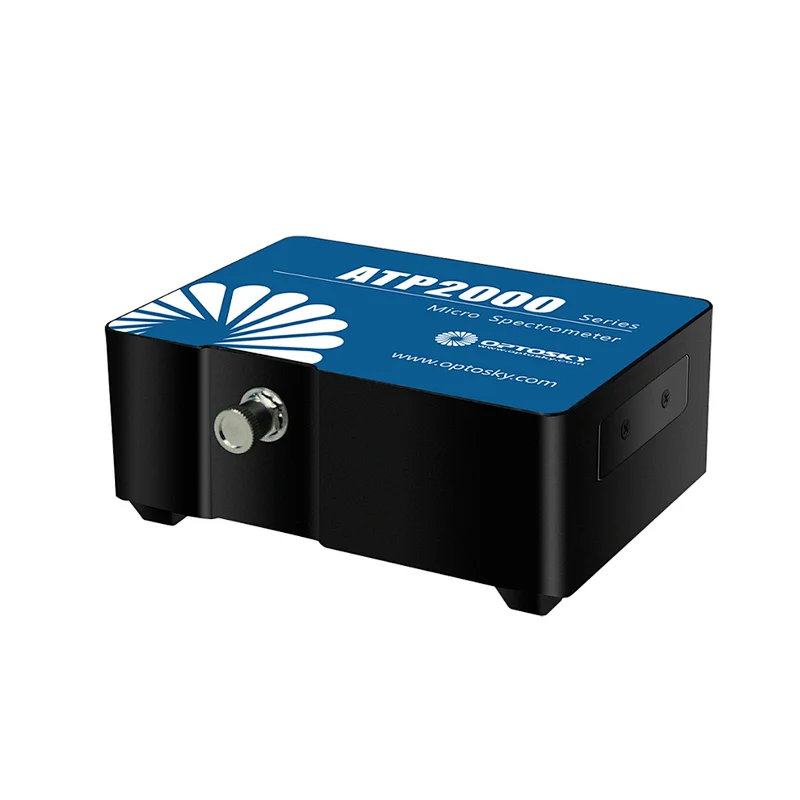
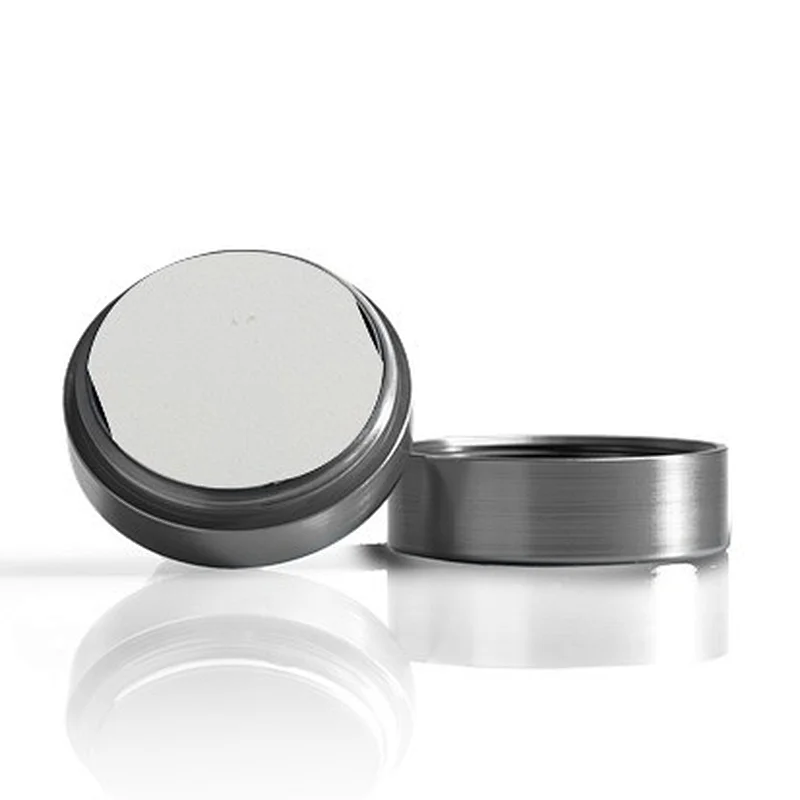
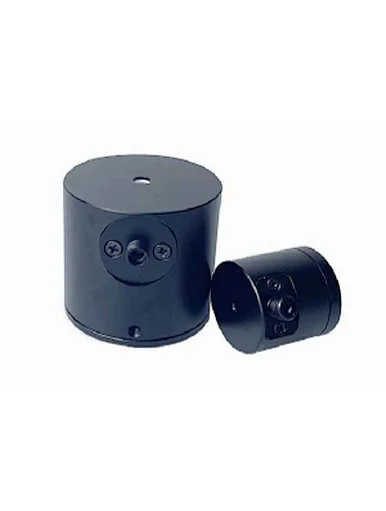
Deuterium Halogen ATG1020H ATP2000P Reflectance Standard Integrating Spheres ATST150T
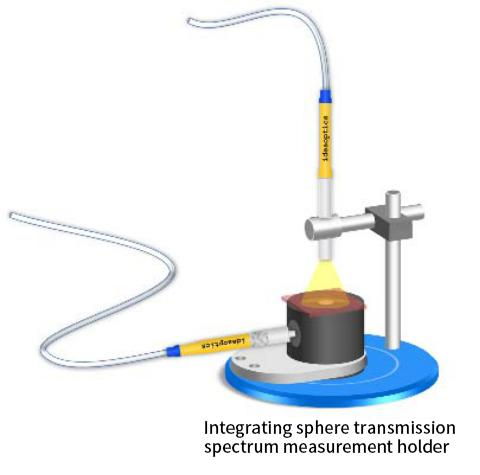
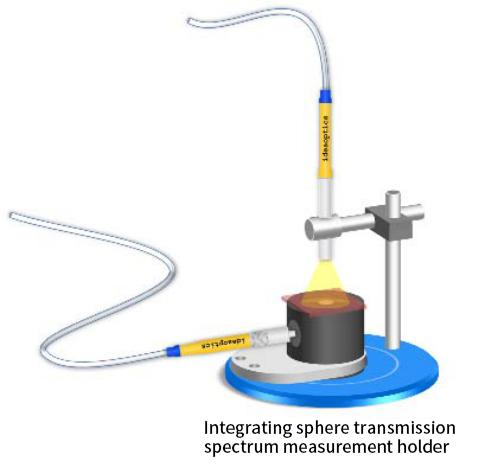
If you are measuring the transmittance of a rough surface sample, you need to use a radial integrating sphere (or called a transmission integrating sphere), such as ATST150T with an inner diameter of 50 and an opening of 10. The bracket model used with this integrating sphere is: ATST150T, and its configuration is shown in the figure below.
Figure 2 Integrating sphere transmission spectrum measurement bracket
Technical Tip: Use of Integrating Sphere
Figure 3 Absorption spectrum test system built with double integrating spheres
Attachment ( Click picture to more details ) Deuterium Halogen ATG1020H ATP2000P Reflectance Standard Integrating Spheres ATST150T
Color Analysis Measurement Solution
Reflection Spectrum Analysis Measurement Solution
Related Article

The ATP7810 is a wide-band, high-resolution infrared grating spectrometer covering up to 0.9–5 μm. Featuring a motorized rotating grating, multiple detector options (InGaAs/MCT), and flexible interfaces (SMA905 or free space, USB/UART control), it delivers high SNR and stability for absorption/reflection/transmission spectroscopy, laser wavelength testing, and fiber optic sensing.
New Product Recommendation | ATP7810 Ultra-Wide Range Infrared Spectrometer Series

This study uses the ATP5200P UV-Vis spectrometer to investigate xanthate adsorption on chalcopyrite surfaces. By analyzing absorbance at 300 nm under controlled pH and temperature, the method optimizes flotation conditions for copper recovery, enabling real-time, sensitive detection of adsorption mechanisms in non-ferrous mineral processing.
Using the ATP5200P Spectrometer to Unravel Xanthate Adsorption and Separation Mechanisms
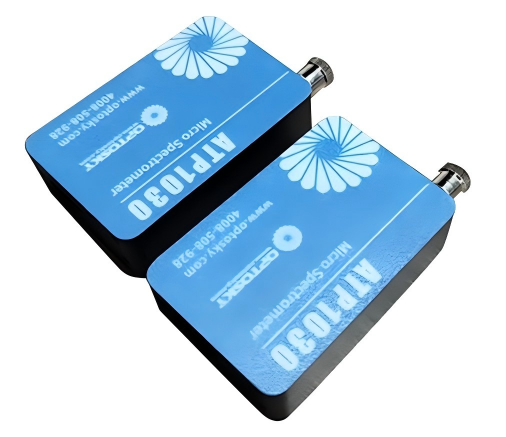
ATP1030 is an ultra‑compact, high‑resolution spectrometer covering 190–1100 nm. With a 1024‑pixel CMOS detector, adjustable integration time down to 1 ms, and USB‑powered design, it delivers reliable performance for applications like online water analysis, color measurement, handheld instruments, and Raman spectroscopy.
Product Recommendation | ATP1030 mini spectrometer Spectrometer

Vis-NIR transmission spectroscopy enables non-destructive identification of infertile duck eggs before incubation, achieving >95% accuracy. By detecting spectral fingerprints (e.g., 836 nm peak for fertile eggs), this method reduces energy waste and improves hatch rates, offering a low-cost, high-throughput solution for modern poultry farming.
Application case | How Spectral Technology is Transforming Duck Egg Farming