
How to Predict the Freshness of Peppers by Spectroscopy
author: Susan
2022-03-02

Abstract
Several researchers from the University of Bonn in Germany recently published a paper, "Non-destructive optoelectronic determination of fruit freshness and shrinkage in sweet peppers". In their study, they set out to identify suitable parameters to determine the freshness of bell pepper fruit of three colors (yellow, red and green) over a two-week period, including the occurrence of shrinkage using non-destructive real-time measurem.1. Experiment objective:
Determination of suitable parameters to determine the freshness (degree) of bell pepper fruit of three colors (yellow, red and green) over a two-week period, including the occurrence of shrinkage using non-destructive real-time measurements.
2. Materials and methods:
Surface gloss was measured nondestructively using a CZ-H72 gloss sensor (Keyence Corporation, Osaka, Japan), a colorimeter, a spectrometer, and a VR-5200 profiler (Keyence) to obtain RGB images.
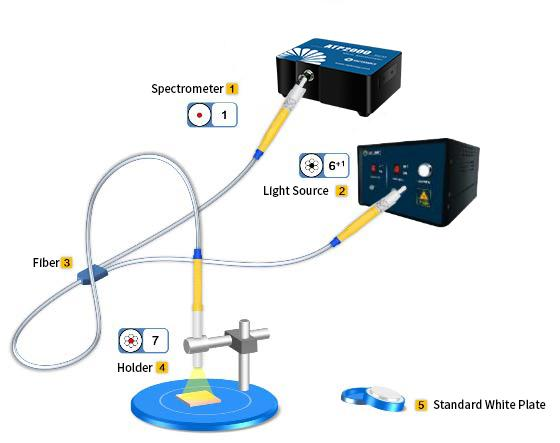
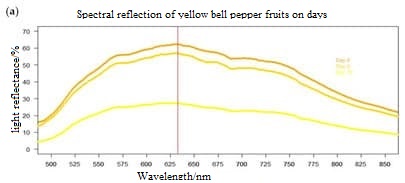
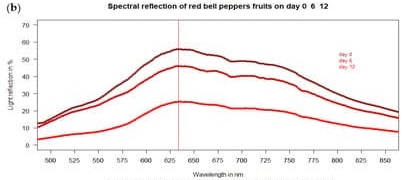
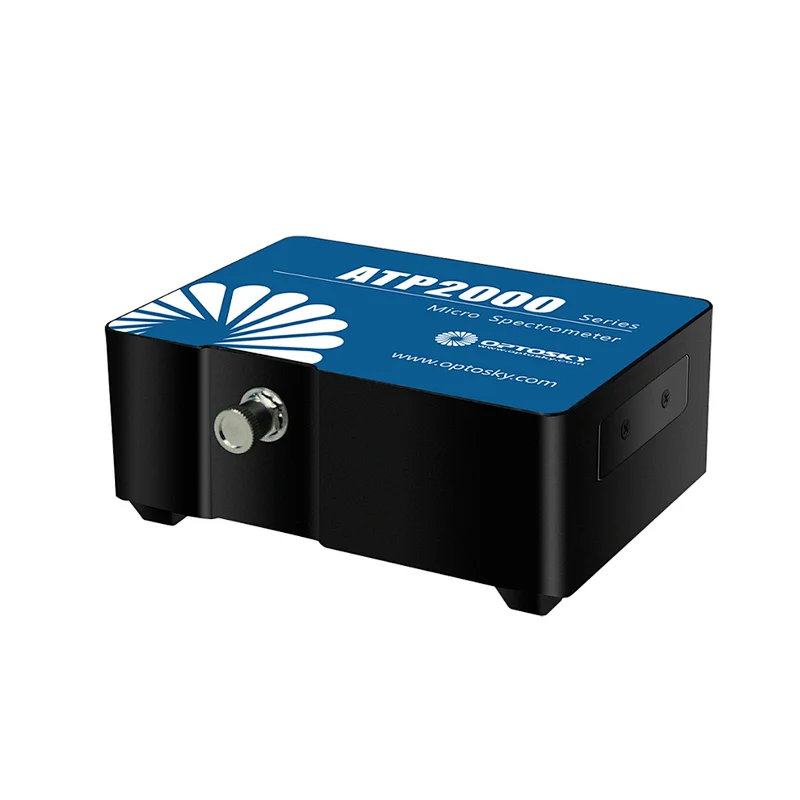
The VIS-NIR spectral reflectance of peppers with different freshness and shrinkage was measured non-invasively using a portable ATP2000P General Spectrometer micro-spectrometer, and the data was processed using SpectraWizTM software provided with the instrument. Measurements were made in the 500-850nm wavelength range using an ATG1002 tungsten halogen light source and an Reflection Probes reflectivity probe to provide a 2mm measurement spot with a measurement time of less than 1s.
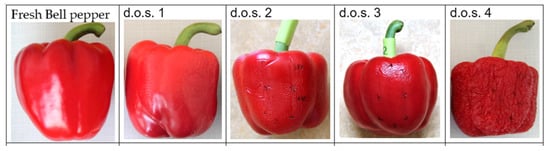
The initial 230-245 g bell pepper fruit lost 2.9-4.8 g FW per day at 17°C and 55% rh during storage and shelf life. After 4-5 days, shrinkage begins with 6-8% weight loss and becomes more pronounced. Gloss decreases from 450-500 au (no shrinkage of fresh fruit) to 280-310 au (moderate shrinkage of fruit) to 80-90 au, regardless of color, on a background of the same color < (eg, light red and dark red) The fruit is severely shrunk.
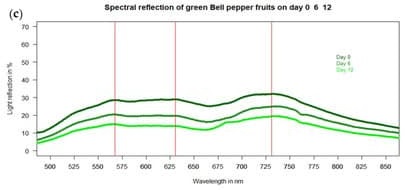
Conclusions:
Overall, it can be concluded that color measurements are not suitable for determining the freshness of bell pepper fruits, whereas profilometers, gloss sensors and light reflectance spectroscopy are suitable candidates for novel optoelectronic methods to define and parameterize fruit freshness.
Related Products:
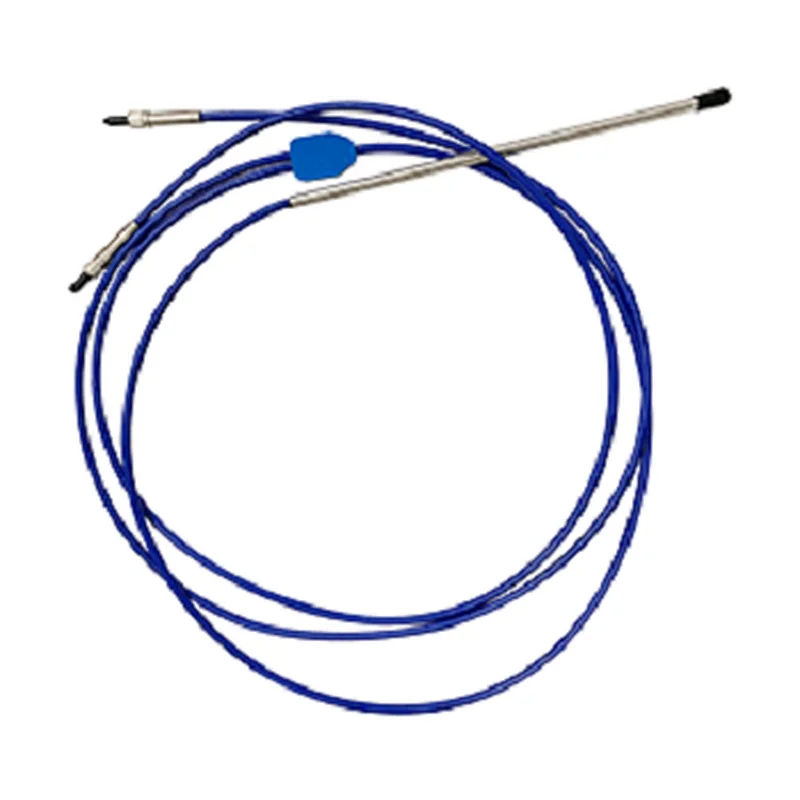
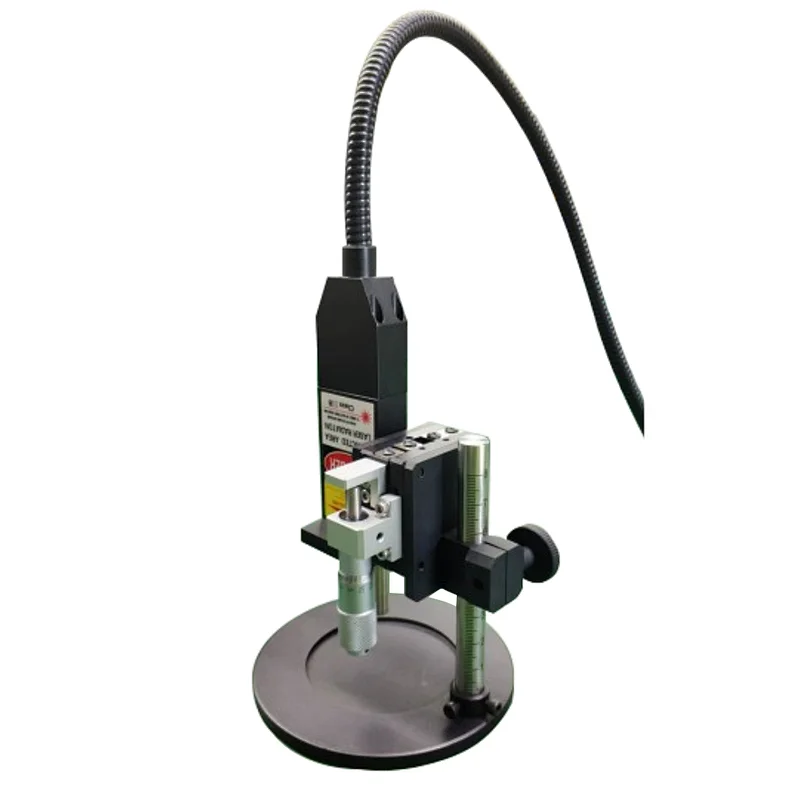
Tungsten Halogen ATG1002 ATP2000P Reflectance Standard Reflection Probes Raman Probe holder-X,Y axizs
Related Blogs:

Reflection Spectrum Analysis Measurement Solution Can Simpler QC Methods Be Applied to Fruitage Coating Processes? Fruit Online Sorting Based on NIR Spectroscopy
Overall, it can be concluded that color measurements are not suitable for determining the freshness of bell pepper fruits, whereas profilometers, gloss sensors and light reflectance spectroscopy are suitable candidates for novel optoelectronic methods to define and parameterize fruit freshness.
Related Products:
Tungsten Halogen ATG1002 ATP2000P Reflectance Standard Reflection Probes Raman Probe holder-X,Y axizs
Related Blogs:
Reflection Spectrum Analysis Measurement Solution Can Simpler QC Methods Be Applied to Fruitage Coating Processes? Fruit Online Sorting Based on NIR Spectroscopy
Spectroscopy - A Journey in Search of Clean Water
Applications of Spectroscopy to Insect
Related Article

The ATP7810 is a wide-band, high-resolution infrared grating spectrometer covering up to 0.9–5 μm. Featuring a motorized rotating grating, multiple detector options (InGaAs/MCT), and flexible interfaces (SMA905 or free space, USB/UART control), it delivers high SNR and stability for absorption/reflection/transmission spectroscopy, laser wavelength testing, and fiber optic sensing.
New Product Recommendation | ATP7810 Ultra-Wide Range Infrared Spectrometer Series

This study uses the ATP5200P UV-Vis spectrometer to investigate xanthate adsorption on chalcopyrite surfaces. By analyzing absorbance at 300 nm under controlled pH and temperature, the method optimizes flotation conditions for copper recovery, enabling real-time, sensitive detection of adsorption mechanisms in non-ferrous mineral processing.
Using the ATP5200P Spectrometer to Unravel Xanthate Adsorption and Separation Mechanisms
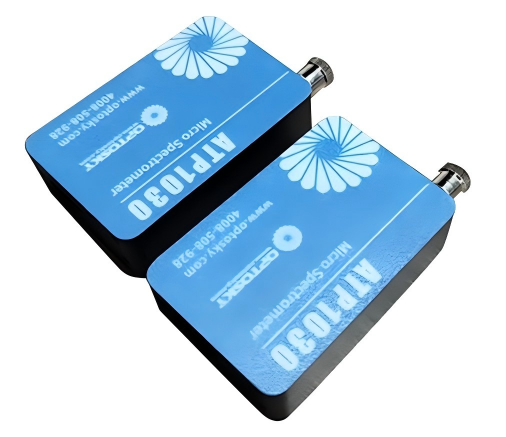
ATP1030 is an ultra‑compact, high‑resolution spectrometer covering 190–1100 nm. With a 1024‑pixel CMOS detector, adjustable integration time down to 1 ms, and USB‑powered design, it delivers reliable performance for applications like online water analysis, color measurement, handheld instruments, and Raman spectroscopy.
Product Recommendation | ATP1030 mini spectrometer Spectrometer

Vis-NIR transmission spectroscopy enables non-destructive identification of infertile duck eggs before incubation, achieving >95% accuracy. By detecting spectral fingerprints (e.g., 836 nm peak for fertile eggs), this method reduces energy waste and improves hatch rates, offering a low-cost, high-throughput solution for modern poultry farming.
Application case | How Spectral Technology is Transforming Duck Egg Farming